
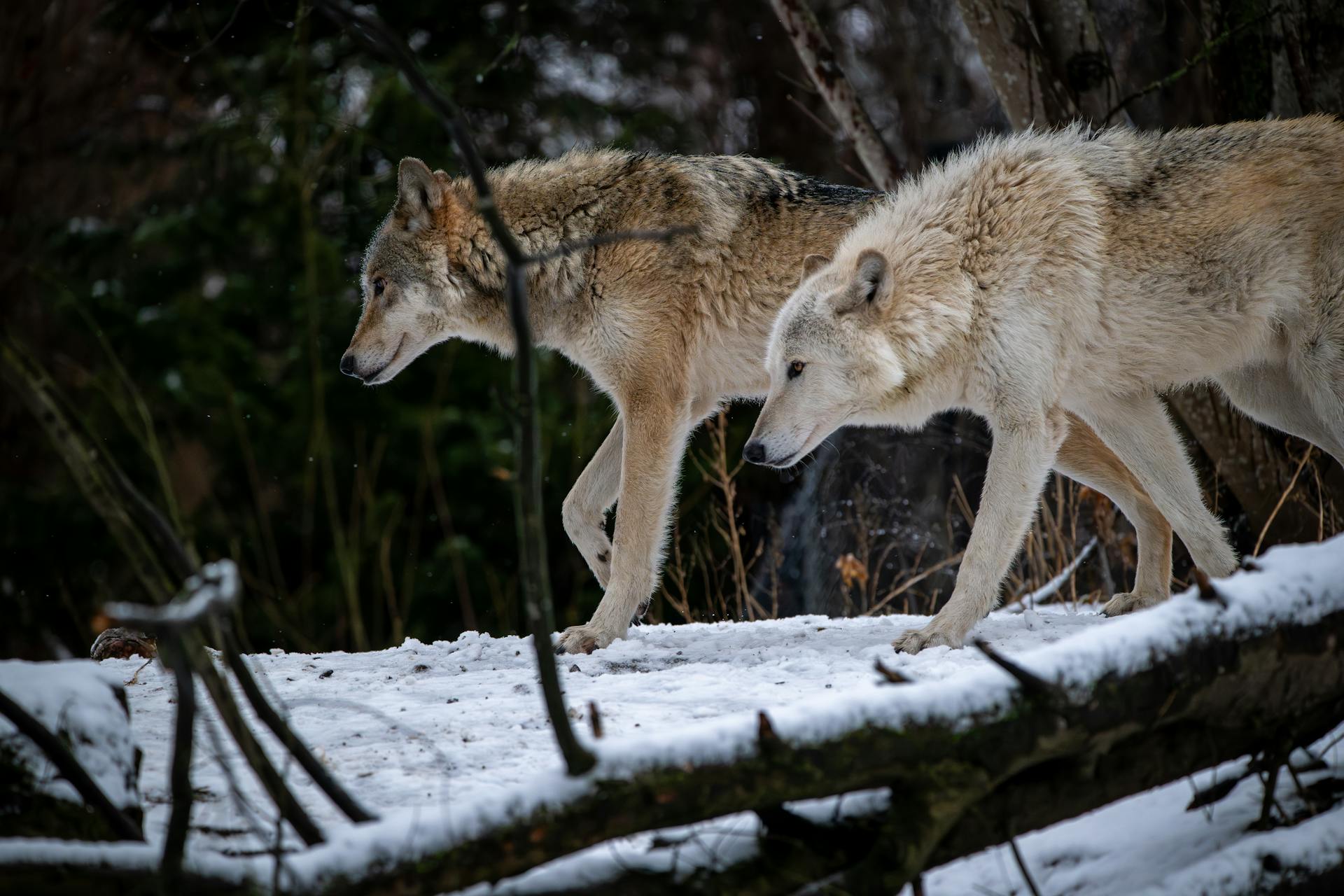
Wild animals don’t survive by strength alone—many survive through structure. From wolves moving as coordinated packs to elephants forming lifelong family networks, social organization is one of nature’s most powerful tools. Social structures help animals find food, avoid predators, raise young, and adapt to harsh environments.
In this guide, you’ll learn how wild species organize their societies, why hierarchy exists, how cooperation works, and the fascinating ways animals communicate and maintain order in the wild. Animal social structures shape how groups hunt, communicate, and raise young in the wild.
What Are Animal Social Structures?
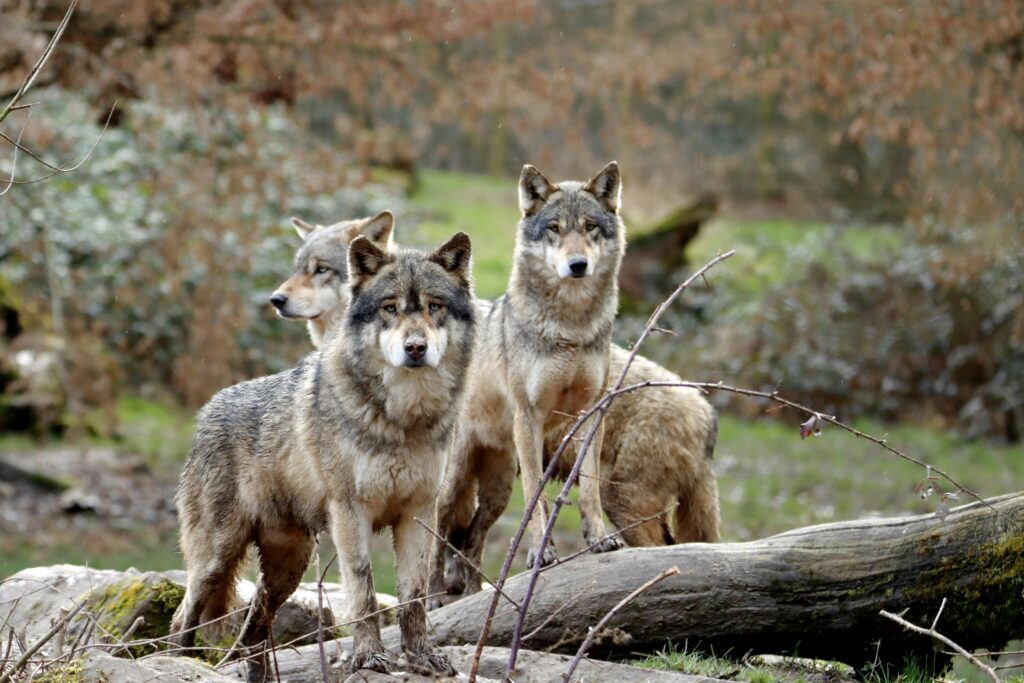
Animal social structure is the pattern of relationships inside a group: who leads, who follows, who mates, who hunts, who guards, and how conflicts are solved. These animal social structures can be simple (pairs) or complex (packs and colonies).
Social systems range from:
- Solitary life (many big cats)
- Pairs (many birds)
- Small family units (foxes)
- Large multi-family groups (elephants)
- Mass colonies (ants and bees)
Every social pattern exists for one reason: it increases the chances of survival and successful reproduction.
Why Do Animals Live in Groups?
Group living has benefits—but it also has costs. Animals stay social because the benefits often outweigh the risks. Across ecosystems, animal social structures help groups share resources and reduce risk.
Key advantages of living in groups
- Protection: more eyes to detect predators early
- Better hunting: coordinated teamwork can bring down larger prey
- Shared parenting: adults may guard, feed, or babysit young together
- Learning: younger animals copy survival behaviors from experienced adults
- Territory defense: groups protect food sources and safe areas
The costs of group life
- Stronger competition for food
- Higher chance of disease spreading
- More conflicts over rank and mating opportunities
Nature “chooses” the social style that works best for each species.
Hierarchy and Leadership in the Wild
Many social groups create a hierarchy—a ranking system that prevents nonstop fighting.
Wolves: leadership through coordination
Wolves are often misunderstood. Most packs act like families, not constant battle arenas. Leadership typically belongs to experienced adults who decide when to move, coordinate hunts, keep the pack together, and protect the young. The key point: leadership is often about experience and stability, not violence.
Primates: alliances and social power
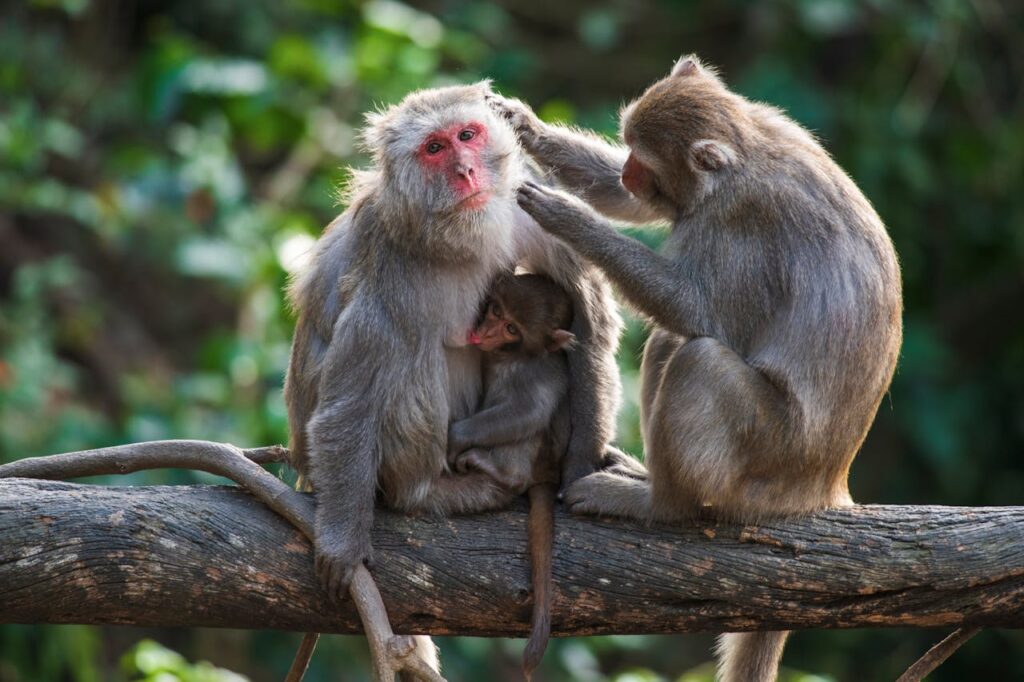
In many primate groups, rank can shift through friendships and alliances, grooming networks, negotiation and conflict, and coalition support during disputes. Here, power is not only strength—it’s relationships.
Elephants: the matriarch’s wisdom
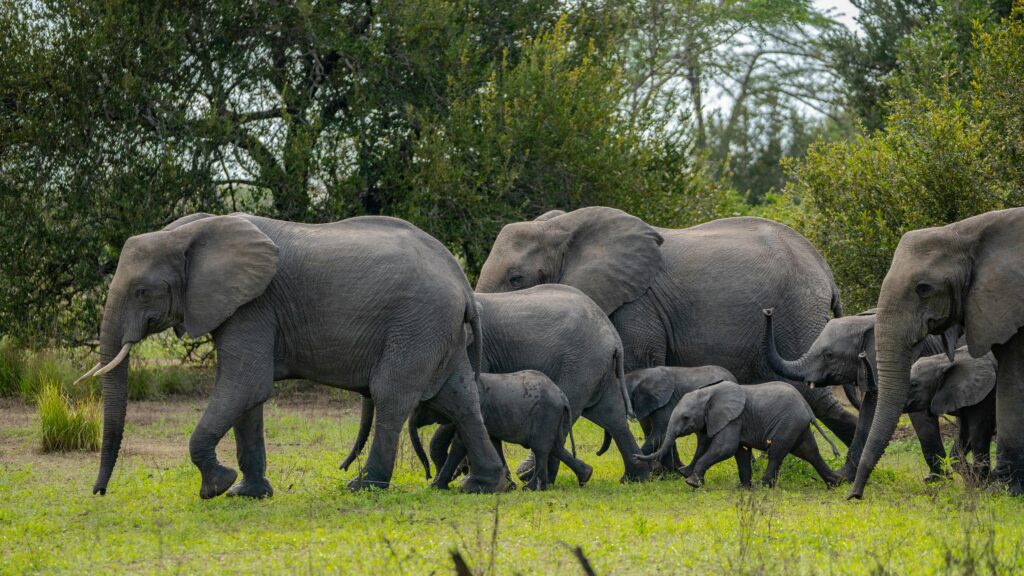
Elephant herds often follow a matriarch (an older female) who remembers where water is found during drought, safe migration routes, and which areas are risky. In harsh seasons, wisdom becomes survival.
Cooperation: The Survival Advantage
Some of the most impressive wild behaviors come from teamwork. For a deeper look at how instincts drive survival in nature, read our guide on animal instinct survival strategies.
Cooperative hunting
Wolves, African wild dogs, and lions often hunt as a team. Some chase prey, others block escape routes, and some ambush from the side. This coordination increases success and reduces injury.
Shared defense
Many animals protect their group with organized behavior. Meerkats assign sentries to watch for danger, musk ox form a circle around calves, and birds mob predators together to drive them away.
Helping raise the young
In certain species, not every adult reproduces. Some become helpers who guard infants, bring food, and teach survival skills. This strengthens the group and increases the survival rate of offspring.
Communication: The Language of Survival
Social life depends on communication—without it, the group collapses.
Sounds and calls
Animals use sound to warn of predators (alarm calls), gather the group (howls, chirps, whistles), and defend territory (loud displays).
Body language
Posture and expression matter. Tail position, facial signals, eye contact, and dominant or submissive stances help animals avoid conflict and maintain order.
These animal social structures rely on signals and shared rules to keep groups stable.
Scent and chemical signals
Many insects and mammals communicate using scent to mark territory, identify group members, and signal mating readiness.
Communication reduces conflict and increases coordination—especially in dangerous environments.
Parenting, Bonding, and Social Rules
Many social species invest heavily in relationships.
Bonding through grooming
In primates, grooming is not just hygiene—it is friendship, alliance-building, trust maintenance, and stress reduction.
You can also explore how social life influences reproduction in our article on animal mating behavior.
Learning from elders
In many species, young individuals learn by observing hunting tactics, migration routes, and social rules. A group becomes a living “school” for survival.
Social Structures Across Different Species
Different species build different “societies” depending on environment, diet, and danger.
Packs (wolves, wild dogs)
Strong coordination, cooperative hunting, and family bonds.
Troops (baboons, monkeys)
Complex politics, alliances and rivalries, and strong grooming networks.
Herds (elephants, zebras)
Safety in numbers, migration patterns, and experienced leadership.
Colonies (ants, bees)
Extreme cooperation, division of labor, and communication through pheromones.
Pods (dolphins, orcas)
Advanced communication, teamwork, and long-term social memory.
Frequently Asked Questions (FAQ)
Do all animals have hierarchies?
No. Many animals are solitary, and some groups have flexible leadership depending on food and season.
Is the “alpha” concept always accurate?
Not always. In many species (like wolves), packs often function as families with experienced parents rather than constant dominance fights.
Why do animals groom each other?
Grooming strengthens bonds, reduces stress, and builds alliances—especially in primates.
What is the most cooperative animal society?
Ants and bees show extreme cooperation through division of labor, but many mammals also show strong cooperation in hunting and parenting. Understanding animal social structures helps us see how cooperation and hierarchy drive survival.
Conclusion
Wild societies are not random—they are systems built for survival. Whether through hierarchy, cooperation, or communication, social structures help species thrive in environments where mistakes are costly. By understanding these natural networks, we see the wild as it truly is: not chaos, but living order.
Leave a Reply