
Animal intelligence is not about speaking a language or doing math—it’s about making the right choices to survive. From crows that solve puzzles to dolphins that coordinate hunts, animal intelligence appears in many forms: learning, memory, problem-solving, communication, and social cooperation. In this article, you’ll discover how intelligence shapes animal behavior, how scientists study it, and why different species evolve different kinds of “smarts.” You’ll also learn practical examples—from tool use to social learning—without exaggeration or keyword stuffing.
Animal Intelligence Shapes Wild Behavior and Survival
In nature, animal intelligence is measured by results. Can an animal solve a new problem, find food in a harsh season, avoid danger, cooperate with others, or learn from experience? Intelligence is not a single trait. It’s a set of abilities that help animals adapt to real-world challenges. Some species rely heavily on memory, others on social skills, and some on innovation and tool use. Understanding animal intelligence helps us understand why animals behave the way they do—and why certain behaviors look surprisingly “smart” in the wild.
What Is Animal Intelligence?
Animal intelligence (often called animal cognition) is the ability to process information and use it to make decisions that improve survival or reproduction. It includes:
- Learning from experience
- Remembering locations, individuals, and events
- Solving problems and adapting to new situations
- Communicating effectively
- Understanding social relationships
- Sometimes: using tools or planning actions
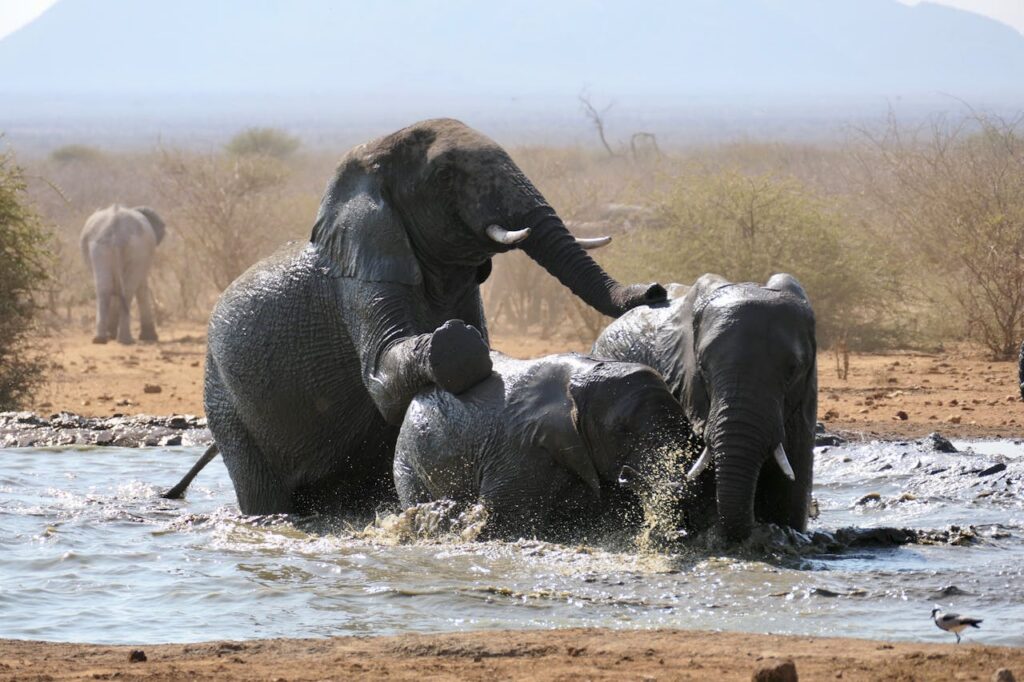
Intelligence doesn’t look the same in every species. A crow may excel at flexible problem-solving, while an elephant may excel at long-term memory and social understanding. Each species evolves the type of intelligence that fits its environment and lifestyle.
Intelligence vs. Instinct: What’s the Difference?
Instinct is an inborn behavior animals can perform without being taught—like a spider building a web. Intelligence becomes obvious when situations change and the animal must adjust. In the real world, most behavior is a blend: instincts provide the basic starting point, and intelligence fine-tunes performance with learning and flexibility.
Why Intelligence Matters in Animal Behavior
Intelligence is valuable because it helps animals:
- Find food when resources are limited
- Avoid predators and dangerous situations
- Raise young more effectively
- Compete for territory and mates
- Adapt to changing climates and habitats
In the wild, small improvements matter. Better decisions can mean fewer injuries, less wasted energy, and higher survival rates. For related insights, read our guide on Animal Instinct Survival Strategies.
Problem-Solving: Intelligence Under Pressure
Problem-solving is one of the clearest signs of intelligence, especially when an animal finds a solution to a situation it has not faced before. Animals encounter new obstacles constantly: hidden food, unfamiliar objects, changing prey behavior, or human-built environments.
Many animals show flexible problem-solving by testing actions, observing results, and adjusting strategies. This isn’t random movement. It’s feedback-based learning—doing more of what works and less of what fails.
Trial-and-Error Learning
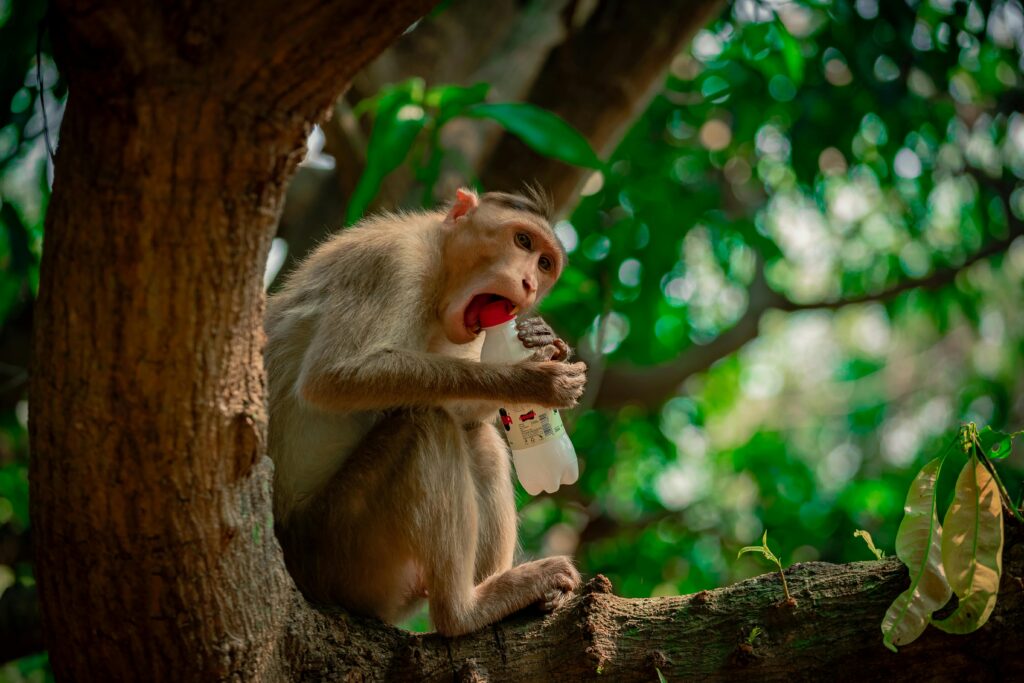
Trial-and-error learning is a powerful survival tool. Young predators often fail early hunts but improve with practice. Birds learn which foods are safe. Mammals learn to avoid risky places after negative experiences. This learning reduces mistakes over time and increases efficiency.
Flexible Thinking and Strategy
Some animals show behavior that looks strategic: choosing the safest path instead of the fastest, waiting for the right moment during a hunt, or changing tactics when a familiar method stops working. In nature, flexibility is often more valuable than raw strength.
Tool Use and Innovation
Tool use is a strong indicator of advanced cognition because it requires connecting a goal with an object-based solution. To use a tool, an animal must recognize that an object can function as a “means” to reach a desired outcome.
Famous Examples of Tool Use
- Crows and ravens use sticks to extract insects and can solve multi-step tasks.
- Chimpanzees use stones to crack nuts and sticks to collect termites.
- Sea otters use rocks to open hard-shelled prey.
Tool use can also reflect culture. Some populations develop tool behaviors that nearby groups do not, suggesting that social learning spreads innovations.
Social Intelligence: Living in Groups Requires Smarts
For many species, the hardest environment isn’t the forest or ocean—it’s the social group. Group living creates challenges: cooperation, competition, alliances, leadership, and conflict management. You may also enjoy our article on Animal Mating Behavior and how social life influences reproduction.
Cooperation and Teamwork
Animals that cooperate can achieve things individuals cannot:
- Wolves coordinate roles during hunts.
- Dolphins work together to herd fish.
- Lions cooperate in hunting and territory defense.
Teamwork requires communication and timing, and it often improves with experience.
Social Learning: Copying Smart Behavior
Young animals frequently learn by watching adults. This can include:
- Hunting techniques
- Recognizing threats
- Choosing safe routes
- Learning group calls and signals
Social learning allows knowledge to spread faster than genetic evolution. A successful method can move through a group in one generation.
Communication and Emotional Signals
Communication supports intelligence because it helps animals share information. Many species use complex communication systems to coordinate group movement, signal danger, and maintain social bonds.
Sounds and Calls
Animals use calls to:
- Warn others of predators
- Gather the group
- Defend territory
- Locate mates or offspring
Some species use different calls for different threats, showing that calls can carry specific meaning.
Body Language
Body language can prevent conflict and maintain group order. Posture, facial expressions, tail position, and eye contact signal dominance, fear, calm, or readiness. In many social animals, reading these signals correctly is essential.
Do Animals Have Emotions?
Animals show behaviors linked to fear, bonding, play, stress, and sometimes grief-like responses. Scientists debate definitions, but it’s clear that emotions influence decision-making and social behavior. Emotional regulation—like calming conflict or delaying aggression—can be a form of intelligence.
Memory, Navigation, and Mental Maps
Memory is a major component of animal intelligence, especially for species that migrate, store food, or travel large territories.
Long-Term Memory
- Elephants can remember routes and water sources over long distances.
- Food-caching birds can remember many storage locations.
Memory reduces energy waste and increases survival during harsh seasons.
Navigation Intelligence
Many species navigate using multiple cues:
- Landmarks and landscape memory
- Smell cues (such as salmon returning to home rivers)
- Sun position and internal timing
- Earth’s magnetic field (in some birds and sea turtles)
Navigation is high-stakes intelligence: small errors can mean missing food, water, or safe breeding grounds.
Are Some Animals “Smarter” Than Others?
Yes, but it depends on the task. Intelligence is often specialized. A dolphin’s cognition may be optimized for social coordination and communication in water. A crow’s cognition may be optimized for object manipulation, innovation, and memory. Instead of asking “which animal is smartest,” a better question is: what kind of intelligence does this species need to survive?

What Science Says About Animal Cognition
Scientists study animal intelligence through controlled experiments and field observations. Common research areas include:
- Learning speed and memory
- Cause-and-effect understanding
- Problem-solving under pressure
- Communication patterns
- Social decision-making
A reliable overview source:
Britannica – Animal cognition: https://www.britannica.com/science/animal-cognition
FAQs About Animal Intelligence
Is animal intelligence genetic or learned?
Both. Genes provide baseline abilities, while experience and learning can strongly improve performance.
Do animals understand humans?
Some do—especially domesticated animals and highly social species. Many can learn routines, gestures, and patterns through repeated interaction.
What is the smartest animal?
There is no single winner. Primates, dolphins, elephants, corvids (crows/ravens), parrots, and octopuses are often highlighted, but “smart” depends on what you measure.
Conclusion
Animal intelligence is real, diverse, and deeply connected to survival. It appears in problem-solving, learning, memory, communication, tool use, and social cooperation. The more we study animal behavior, the more we realize that intelligence is not uniquely human—it is one of nature’s most powerful strategies for adapting to life in the wild.
Leave a Reply